As a teacher, we know that not everything is perfect. There isn’t that perfect book that will attract all of the students in your classroom, not a book that will hit the Reading level of a low-level reader while respecting their maturity level as a 4th grader. Self-publishing is turning into the perfect way to solve this very-specific problem in your classroom.
- Backstory
- Self-publishing
- Manuscript generation
- Revisions
- Print and distribution on Amazon
- ISBN
- Getting into libraries and Book stores
- Pricing
- Author Copies
- School visits
Backstory
As an autistic and ADHD writer, I am painfully required to give you the backstory. I wish it was a joke.
Writing Journey
I have always been writing short stories, since I can remember. Most of them weren’t any good, and many bordered on fan-fiction from whatever TV show was trending that year. But writing is still writing.
Creating a Travel Blog, then a teaching blog, seemed to quench that thirst for a good few years but it isn’t the same as writing an actual short story.
When I started teaching Core French, that’s when I knew I needed to step it up. I have written before about the importance of accessible phonics stories and activities in the classroom. French Immersion classrooms are being given readers to achieve fluent literacy while Core French is asked to sing songs and hope students can sound it out on their own.
So I created short-stories with specific unit themes and digraphs in mind. I was limited to the language we had already learned orally in class, so that students would recognize how to blend the sounds and self-correct.
And this is where it all started.
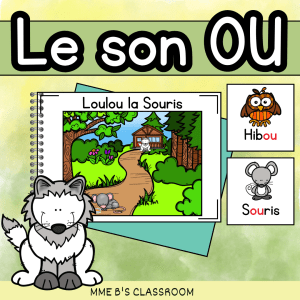
My first short-story
While many French-teaching experts have “suggested” that Core French only use authentic and purposeful units to get students to level A1/A2, I took a different approach to the same goal.
Their specific examples were “why teach about Penguins and their habitats when they can barely hold a conversation”. This was said while I was knee-deep into my Penguin unit. But we had an authentic and purposeful point to our unit; verbs, adjectives, sentence generation, and lots of laughs.
During the course of our unit, we learned specific language around the Penguins and used them to describe pictures, listen and draw while I described a picture, Read stories and they had to pick out the learned vocabulary to tell me what was being said.
At the end of the unit, students had learned actual knowledge about Penguins and the Antarctic – specifically that they are not in the North Pole – but also valuable and authentic words that can be used in any other context. We turned this knowledge into a short story.
The class was tasked with creating a short story, in French, about a penguin. Every single detail was up for a class vote. They were allowed to use some English, but for the most part, they knew all of the words they needed to make short sentences, one at a time. By the end, we had a 3 Page story.
I divided the pages into paragraphs, printed 45 copies, and every student was in charge of making their own pictures for their copy. This meant they also needed to read the paragraphs on their own to understand what they needed to draw. It was incredible. The entire process took about 2.5 weeks and it was ready to go home for March Break.
But how did this lead me to writing my first story for publishing?
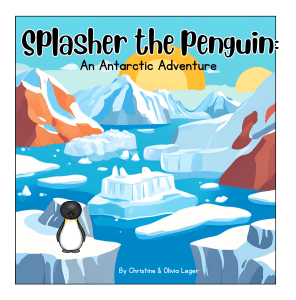
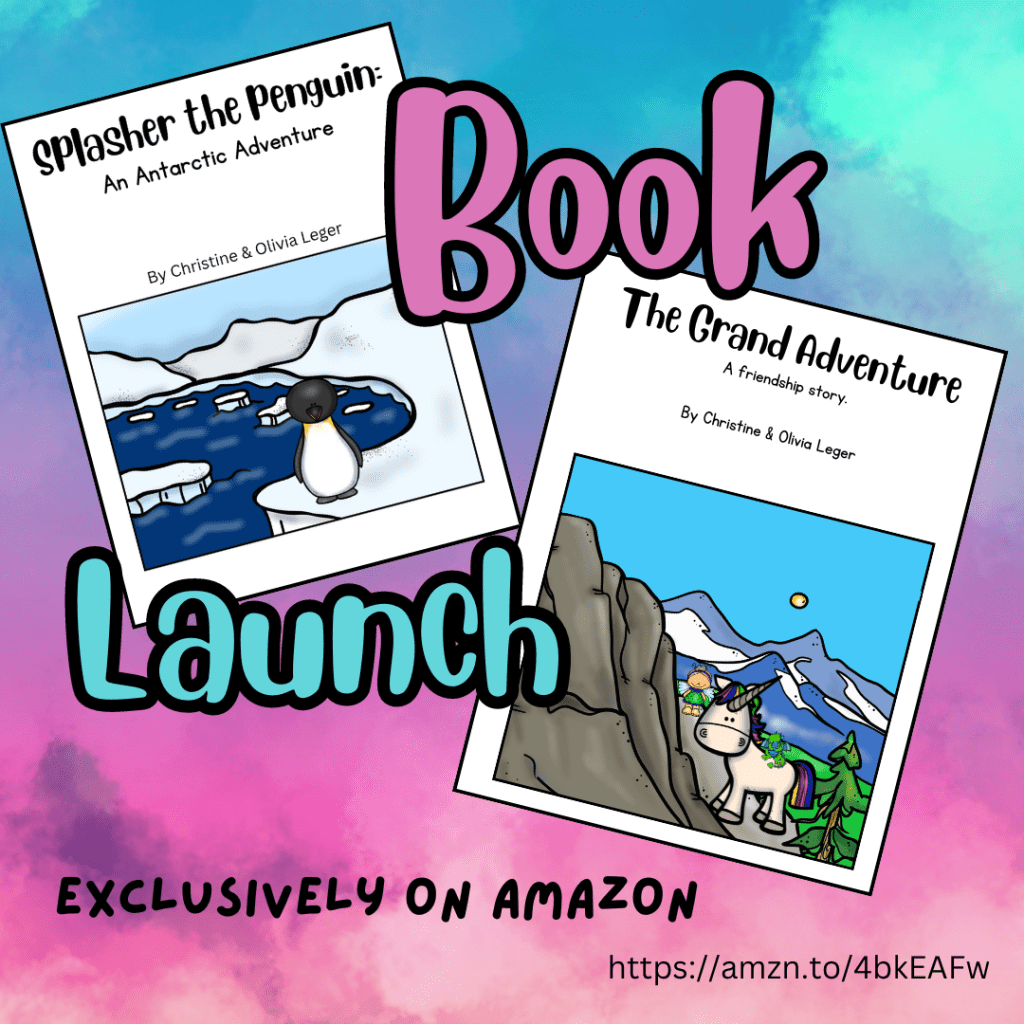
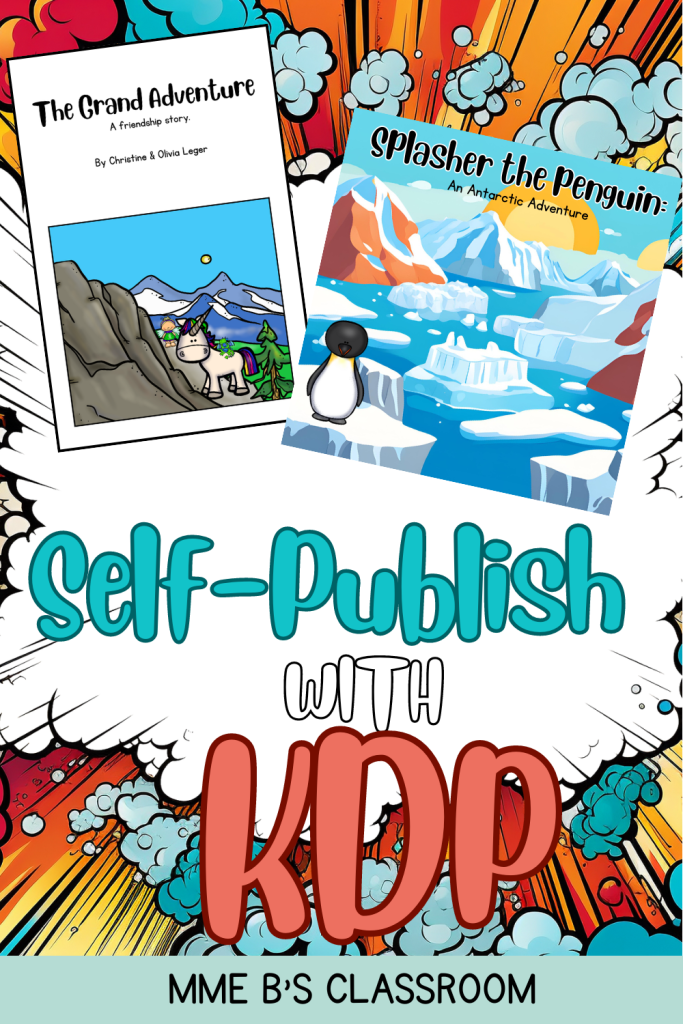
Splasher the Penguin
As I am recounting my day to my own children, my youngest thought this was a great idea and wanted to join in. She took the same steps we did in class; Character, setting, beginning, end, 3 problems in the middle.
Side note – I had been part of a PD seminar with Timm Holmes and he described this amazing journey for short story writing that was accessible to children.
We spent the better part of 3 hours coming up with a detailed outline, just me asking her a ton of questions to fill in the detail. Then I sent her to bed. By morning, I had a decent amount of work done.
Once it was complete, I sent her to school with a printed copy and it was over… Until End of Year.
The last 2 weeks of school are the worst for classroom management, and I was out of ideas. I had wrapped up my lessons, reports were submitted, and it was HOT. I decided my class time would be used to help the Home Room teacher finish her necessary lessons, and clean up the classroom when needed.
One day, a scheduled activity was canceled moments before it was to take place, due to weather and neither one of us had anything planned. So I pulled up my Canva story and we did a Read aloud. Kids sat nicely at their desk and coloured, while I read them Splasher the Penguin.
It didn’t take long for them to drop what they were doing and their eyes were laser focused to the screen. There were only a few pictures on each page at the time but the images were bright and eye-catching.
This is when the homeroom teacher, my teacher bestie and favorite human, suggested I have it published. Not thinking it was any good, she reminded me that she had been teaching Primary grades for the better part of a decade and this was a good story for class. And the children agreed.
So I bit the bullet and looked into self-publishing.
Self-publishing
Amazon KDP is a great platform to publish your work. The website is free to use, easy to navigate, and Youtube has hundreds of video tutorials to help when instructions can be a little too confusing. Did I mention, they have a chat-help desk that will look at your specific book and give you specific recommendations when there is a problem.
There are a few requirements, like your book has to be a minimum of 25 pages, so my mini phonics readers are a no-go for Amazon, Hardcover is a minimum of 75 pages, and a few other requirements.
There is a large range of book size, to match the asthetics of your creation. As well as paper and colour options to match your intended audience. My picture book will be glossy paper and thicker pages to prevent accidental tearing from a kindergartener.
Manuscript generation
At first, I thought this was a no-brainer. Type it into a Word doc and away you go. No no. That’s how we wrote stories in Junior High. This is KDP.
Thankfully, KDP and Youtube are aware of Canva and make it so easy to use Canva, or other programs for your Windows PC or Mac. I use Canva because it is what I am familiar with from creating Blog marketing images and short-stories for the classroom.
In KDP, you will want to find the specific page size, margins and bleed amounts for the book you want to create. In Canva, create a document with those specifications and start creating.
I will not get into the minor details of how to create pictures in your books, but ChatGPT-4, Clip Art, and other mediums are great for those that can’t draw – like me – or aren’t interested in hiring an illustrator. Be sure to verify the licencing agreements before using any Art for profit.

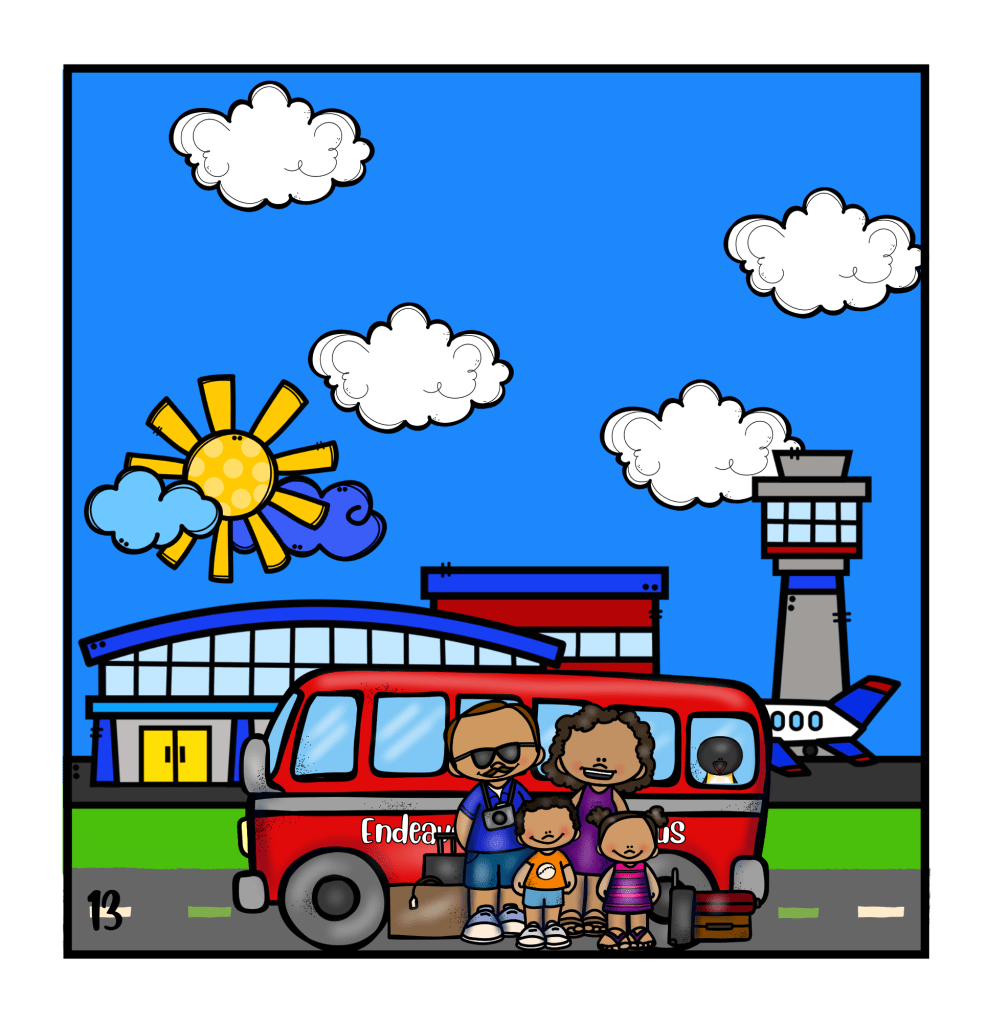
Once your Manuscript, or book interior, is ready, be sure to download it as a PDF and flatten the pages. Upload to KDP, and they will tell you instantly if there is a problem with the formatting. They also give you the option of providing a cover page or using their AI tools to generate a cover page with you editing the final results.
Note that KDP does not edit your document. They will print it exactly as you approve it, so be sure to edit and edit again before uploading.
Revisions
Once your book is uploaded, reviewed and published, there is always room for revisions. If you discover any errors, simply go back into the KDP bookshelf, upload the revised manuscript and wait the 72 hours for the revisions to be approved. As long as you haven’t messed with the margins, then there shouldn’t be a problem.
Once published, however, a book can not change it’s underlying details. The language, title and other specifics can not change. Only the content itself, so be sure to select the correct categories and details in the settings before approving your book for sale.
Otherwise, you will need to delete the sales page and start again. As you do not own the Amazon page your book is hosted on, there are no options of redirecting the links you have provided in marketing.

Print and distribution on Amazon
Once your book has been uploaded and reviewed, you will be notified that it is ready to be published. Publishing only means that Amazon is hosting your book on their website, and will print/distribute all sales on your behalf. They will not market your book for you.
As the author, you are solely responsible for marketing your book and generating views to the Amazon page. There is an option to create ads within Amazon to promote your book, but this comes with a price tag as well.
Amazon suggests that you create an Author page. This means that you will have a picture and short bio available when customers click on your name. This will also host all of your titles, should you self-publish more books in the future.
ISBN
Amazon will provide your book with an ISBN number that is linked to Amazon self-publishing. Which is great. But this will only work in Amazon.
Depending on your country, it may work differently. In Canada, the federal government has a database that generates ISBN free of charge. Sign up on their website, provide book details, and they will create an account for your.
Each variation of your book will require a new ISBN; ebook, Hardcover, paperback etc. And it will all be catelogued in your profile. Using these ISBN numbers, you may proceed to have your book published into the world.
Getting into libraries and Book stores
This is the step that I am currently on. How does a self-published writer, with no marketing skills or sales department, get their works in front of more faces?
There are many distribution centers available to choose from, but I am using Ingram. They are linked with most public libraries and Book stores around the world. They will print and distribute your book to any wholesaler that requests it. And your title will be added to their list of available books, so when buyers are looking for something new, you are shown to them.
These types of distributers will not generate an ISBN for you. You will be required to generate one on your own, and they verify its authenticity before releasing your title.
However, this does not replace marketing. With so many titles available at any given time, your book will get lost. Ingram has an FAQ page and sell sheet template that they suggest you use. This will be how you reach out to Libraries and local book stores to carry your title. If they want to carry your book, they will use this Sell-sheet to purchase copies from Ingram. You will not be responsible for printing and shipping copies.
Pricing
These platforms all come with a fee. They will want part of your profits after printing to cover their own bottom line.
Many will suggest comparing your book to those selling online already and pricing it accordingly, but this is hardly the case.
In terms of my latest story, The Grand Adventure, would be most similar to Geronomio Stilton. They retail for $10 Hardcover. On KDP, the cost of printing a single paperback copy of my book is $7, plus the $4 Amazon fee. Obviously we have very different printers and printing in bulk is allowing Stilton to print at such a low cost. But this won’t change the facts that I can not compete with them. Maybe in the future, but not today.
Part of your marketing strategy should revolve around what makes your book special and worth the extra price; local author, teacher author, child author, self published… anything that makes you stand out and helps the audience understand the pricing differences are not related to greed. But of necessity.
Author Copies
Both Ingram and Amazon allow you to purchase author Copies at cost, no questions. Ingram’s cost per unit is much lower than KDP but they charge much more for shipping, while KDP prints in Province but isn’t subject to Prime free shippin. Both will deliver to your door and printed as per usual.
If you are wanted to visit a Flea Market, Craft Show, or local bookstore with books in hand, this is the way to go. Author Copies are great for reducing the overhead cost, and therefore you have a few great choices to make; reduce the cost of the book and pass the savings on to your customers, or keep the price the same and pocket an even larger profit compared to pricing online. Both are very valid options for many different reasons.
Personally, I plan to donate a copy to both my children’s schools, my own school and a few family members.
School visits
I am not the only teacher-author in my building, and my daughter’s school has a few teacher-author, and parent-authors as well. We are not fighting for attention, there are plenty of bookshelfs to hold all of us.
Every year, the teach-authors from my school release a new book over the summer and host a read-aloud with the students in the library in May. There are months of advertising with the parents and staff before this assembly even takes place, and pre-orders are strongly recommended.
At the school visits, the teacher-author reads the book out-loud, answers any questions, gives out bookmarks with her book website clearly written on it, and distributes all pre-orders. There are also many copies available for staff and students to purchase a copy on site if they forgot to do so in advance.
As a member of staff, she can’t charge for the experience while simultaneously being on the clock but she is making money with the sales of her books. If she were to visit another school, her website does have pricing for visits. This is another great way to market your book.
Not all schools can afford to pay an Author to visit, and those are the schools that need it the most. Speak with that school’s Parent Council to see what the budget can afford, and be sure to have ample accommodations in your website for these schools. They may not be able to pay much, but they will appreciate the experience even more so.

 Mme B's Classroom
Leave a comment